Monday, February 13, 2012

Is "Bad Science" an Oxymoron

Bad Science
View full size
By Alfred Burdett

Having written on occasion about scientific fraud, scientific data manipulation and outright scientific nonsense, I was invited by its creators to comment on a poster entitled Bad Science, the psychology behind bad research, offered as a resource on the ClinicalPsychology.net website.

"Scientists," states an introduction to the poster, "are some of our most trusted members of society ... [but] many scientists are not as trustworthy as we would like to believe. By engaging in various kinds of scientific misconduct, such as falsifying or fabricating data, scientists are getting the results they want without the honesty and integrity that we expect of the scientific institution."

As a scientist of almost 50 years standing, it's news to me that scientists are among the most trusted members of the community. Personally, I would trust a scientists no more and no less than I would trust a banker or a politician. And that is surely not being unduly cynical, for as everyone knows, when their work impinges on important economic or political questions, scientists can be remarkably responsive to the interests of those funding their work, whether it be the tobacco industry, the drug industry, the arms industry or a government with an agenda on climate change, HIV/AIDS, the psychiatric treatment of political dissidents, or the use of tactical nuclear weapons in populated areas. So it seems to me that the people at ClinicalPsychology.net are proceeding on the basis of a questionable assumption.

There is no question, however, that data falsification (are falsified data, truly data at all in the scientific sense?) and data fabrication are not activities to be encouraged, so when ClinicalPsychology.net tells us to read their "infographic" to find out how to fix the problem, we are prepared to read on.

However, what we find is little in the way of the promised account of the "psychology behind bad science" or effective means to "fix the problem," but mainly a series of assertions about the prevalence of scientific fraud. "Shady scientific research is rampant" we are told, which sounds bad, but what does it mean. Well for one thing, "One in three scientists admit to using questionable research practices," which include "dropping data points based on gut feeling," and "changing the results or design of a study due to pressure from a funding source."

So now we begin to have some idea what they are talking about, but it nevertheless remains vague. What, for example, does it mean to drop a data point "based on gut feeling"? Presumably it means that the scientist believes that they have a plausible justification for dropping the data point in question: "I noticed some crud in that tube when I was adding the reagents," or "the rat that died looked sick before we began feeding it GM corn." Adoption of such rationalizations for the selection of data is not considered acceptable practice but it has a venerable history in science, and while few would condone it, the question of whether it constitutes "bad science" is less clear than many might suppose.

Scientific knowledge is not a collection of facts, it is a system of laws, principles and patterns which allow us to infer from a given set of facts another heretofore unknown set of facts, including facts about past, present or  future. Thus science as a process of discovery is concerned, primarily, not with any specific facts, but with ideas about the relationships among facts in the observable world. Because there is uncertainty about all particular observed facts, there is no overwhelming reason to reject a good idea because it is inconsistent with some observation that "gut feeling", i.e., some plausible argument, suggests is false.

Saturday, February 11, 2012

How can Wikileaks battle mainstream media disinformation by working in collaboration with the mainstream media? LOL

A project such as Wikileaks could provide a most effective mechanism for both diverting the alternative media with misleading or fabricated information, and identifying for termination genuine leaks damaging to US/NATO's imperialist agenda and the anti-social or criminal activities of multinational corporations.

That Wikileaks founder Julian Assange is a recipient of the Sam Adams Award "for integrity in intelligence," which is given annually by a group of retired CIA officers, appears to confirm the hypothesis that Wikileaks is an intel operation.

That Wikileaks claims to have as its primary interest, oppressive regimes in Asia, the former Soviet bloc, Sub-Saharan Africa and the Middle East in no way detracts from the notion that it is an intel or propaganda operation serving the the aims of Western hegemony.

That Wikileaks has collaborated extensively with the mainstream media in the selection and redaction of material to be leaked supports the same conclusion.

In this excellent analysis of Wikileaks and the parties with which it has collaborated, Professor Michel Chossudovksy spells out exactly why Wikileaks has the essential features of a mechanism for the manufacture of controlled dissent.

Human Biodiversity: Liberals Rediscover IQ

By Dennis Mangan

Whenever the subject of intelligence testing comes up, especially in the context of racial and ethnic differences in intelligence, or disparate outcomes in education, liberals can always be counted upon for their skepticism towards the entire subject of IQ testing. They will usually claim that the tests are either biased or don't measure anything real - as in "IQ measures the ability to take an IQ test". This is of course ironic, since individual differences in intelligence as measured by IQ testing is the most established and robust finding of modern psychometrics, and liberals constantly proclaim their devotion to science, only inbred conservatives being opposed to scientific findings.

But liberals become IQ believers when something like this happens: Low IQ & Conservative Beliefs Linked to Prejudice.

Some of the quotes from the article show how a study like this operates. For instance:
Social conservatives were defined as people who agreed with a laundry list of statements such as "Family life suffers if mum is working full-time," and "Schools should teach children to obey authority."
I guess smart liberals believe that a mother working outside the home full-time couldn't possibly have any downside for family life, and that their indoctrination of schoolkids in things like environmentalism, global warming, and the essential evilness of America's past don't constitute teaching children to obey their authority.

The essential point to make here is that the average Democratic Party member is very likely not as intelligent as the average Republican, since the Democratic Party contains more minorities, who on average score lower on IQ tests than whites. But once you point out something like that, liberals go into IQ denial.

Friday, February 10, 2012

How Iran Threatens the United States of Aggression

Each star marks the location of a US military base. Image Source: Juan Cole

Thursday, February 9, 2012

Nulius in verba: On the word of no one

Or how the Royal Society betrayed its original purpose to become another quasi governmental organization spewing the scientifically correct official line

By Andrew Montford

Foreword by Professor Richard Lindzen

Andrew Montford provides a straightforward and unembellished chronology of the perversion not only of The Royal Society but of science itself, wherein the legitimate role of science as a powerful mode of inquiry is replaced by the pretence of science to a position of political authority.

The simple chronology speaks for itself, though one cannot read it without thinking, at least, about the motivations. Already in the 19th century, gentleman scientists, like Darwin, noted the potential constraints on scientific inquiry that were associated with functioning within universities. The potential in recent years is obviously magnified by the near monopoly over science support exercised by governments. In the US, our National Academy of Science (NAS) has always had official status as adviser to the government. However, the role was relatively passive until the 1970s.

The 1970s saw a marked expansion of the National Research Council, the branch of the National Academy of Science responsible for responding to government requests. With the presidency of Frank Press (1981-1993), the staff of the NRC increased to over a thousand. Frank often boasted that The Royal Society was envious of the position of the NAS and the existence of its NRC. The global warming issue, it would appear, has offered The Royal Society the opportunity to rectify this situation.

Nevertheless, there are certain peculiarities of The Royal Society’s behavior that are perhaps worth noting. The presidents involved with this issue (May, Rees and Nurse) are all profoundly ignorant of climate science. Their alleged authority stems from their positions in the RS rather than from scientific expertise. This is evident in a variety of ways.

For example, in an exchange in the Financial Times (April 9, 2010), Martin Rees and Ralph Cicerone (President of the NAS) defended global warming concern by noting essentially that carbon dioxide (CO2) was increasing and that climate was changing. Of course, climate is always changing, and increasing CO2 must make some contribution, but none of this suggests anything alarming. The alarm results from controversial feedbacks wherein the small impacts of CO2 are, in current computer models, greatly amplified. With respect to these feedbacks, Rees and Cicerone say: “Uncertainties in the future rate of this rise (referring to global mean temperature anomaly), stemming largely from ‘feedback’ effects on water vapor and clouds are topics of current research.” That is to say, we don’t even know if there is a problem. Yet, Rees and Cicerone conclude: “Our academies will provide the scientific backdrop for the political and business leaders who must create effective policies to steer the world toward a low-carbon economy.”

In other words, regardless of the science, the answer is predetermined. Is this simply ignorance or dishonesty? My guess is that Rees and Cicerone were only mindlessly repeating a script prepared by the environmental movement. In this report Montford documents some disturbing general trends, which one can only hope that scientists of good standing shall increasingly continue to oppose.

Summary

For 300 years after its foundation, the Royal Society adopted a position of aloofness from political debates, refusing to become embroiled in the controversies of the day. This position was encapsulated in the Society’s journal, The Philosophical Transactions, which carried a notice that ‘It is neither necessary nor desirable for the Society to give an official ruling on scientific issues, for these are settled far more conclusively in the laboratory than in the committee room’.

In the 1960s, the society became increasingly involved at the interface of science and political policymaking.With the elevation of Robert May to the presidency, the Society became highly politicised, involving itself in political advocacy and media campaigns. In 1989 it had issued the first of its highly controversial position papers on climate change, a document that eschewed the sober language of the scientist in favour of denunciations of those who questioned the reality or extent of manmade global warming.

May’s political approach was continued by his successor, Martin Rees, with the Society’s authority being used to try to cut off funding of sceptic groups and with Rees putting forward positions on the economics of climate change. The Society issued a series of highly political statements demanding action from politicians.

Under Rees, another combative statement on the science of global warming was issued. With the Society again adopting a political rather than scientific tone, a substantial group of the fellows was stirred to action, demanding that the Society reconsider the unscientific way in which it was addressing the global warming question, the result being a much improved position paper on global warming that reflected at least some of the critics’ concerns.

Despite this, the Society has yet to distance itself from its former unscientific conduct, and the new president, Paul Nurse, has begun his term of office by staking out some very questionable positions on the role of scepticism in the climate debate.

Immense damage has been done to the reputation of the Society by its last three presidents. While the fellows’ rebellion has improved matters considerably, the continuing desire of the Society’s leadership to engage in political controversies represents a serious ongoing risk to the Society’s reputation and an abandonment of its principles.

Full report

Related: 
Canspeccy: The Trashing of Tim Hunt, a Breach of the Social Contract, the Death of a Civilization

Monday, February 6, 2012

The US Federal Reserve Really Does Turn Over Profits to the Treasury

It is repeatedly stated by bloggers and others self-published on the Internet that the US Federal Reserve is a scam because it prints money for the US Government and then charges the US Treasury interest on the money thus conjured out of thin air.

In fact, charging interest on money created out of thin air is what commercial banks do. They create credit in amounts many times what has been placed on deposit with them and charge borrowers for the use of the money thus created.

The Fed, however, operates differently. If the Treasury needs money, it prints off some bonds and hands them over to the Fed, which then writes the Treasury a check for money it does not have -- so-called ink money.

The Treasury then spends the money the Fed just created out of thin air, while paying interest at the rate specified by the bonds held in the Fed's portfolio.

However, at the end of the year, the Fed pays the Treasury its profits, i.e., interest earned on the Government paper it holds less operating expenses.

So all that actually happens is that the Government pays itself interest on money created for it by the Fed, less the cost of the Fed's role as an intermediary.

Why, one might ask, involve the Fed at all?

The answer is that by handling the Government's paper, the Fed can control the money supply by selling bonds to the public, or buying them back.

When the Fed sells bonds it takes money out of circulation and reduces the money supply. When the Fed buys bonds either from the Government or the public it increases the money in circulation.

The money that the Fed receives on the sale of bonds to the public goes out of existence as magically as the ink money with which it purchased the bonds was conjured into existence.

The only significant consequence for the Treasury of Fed bond sales is that the interest on the bonds is no longer returned, courtesy of the Fed. It is at this point that the interest on the money created by the Fed becomes a real expense to the Treasury and thus to the American taxpayer.

This is as it should be, since the money with which the bonds have been purchased by private parties is real money, not funny money, which is to say that by purchasing government bonds, investors are giving up use of their money and expect, naturally, to earn interest in return.

Confirming that the Fed does not earn interest beyond its expense of operation on bonds that it purchases from the Treasury, the New York Times states in an article published today:
The Federal Reserve said on Tuesday that it contributed $76.9 billion in profits to the Treasury Department last year, slightly less than its record 2010 transfer but much more than in any other previous year.

The Fed is required by law to turn over its profits to the Treasury each year, a highly lucrative byproduct of the central bank’s continuing campaign to stimulate economic growth.

Almost 97 percent of the Fed’s income was generated by interest payments on its investment portfolio, including $2.5 trillion in Treasury securities and mortgage-backed securities, which it has amassed in an effort to decrease borrowing costs for businesses and consumers by reducing long-term interest rates.
So if any cranks or crackpots out there still wish to maintain that the Fed prints money and pockets the interest on it, I say take it up with the New York Times, and don't waste your time arguing the point here.

None of which is intended to suggest that the Fed is an unmitigated blessing on the American people or that it should not be audited. On the contrary, it is impossible to judge the value of the Fed without knowing what it does, and anyone who opposes a thorough review of the Fed's activities is probably a banker whose owes their job and bonuses to the generosity of the Fed to undeserving speculators and fraudsters.

Iran provides the West good reason to resist multiculturalism

The practices of Muslims are in some respects deeply repulsive to those brought up in the ethical and legal tradition of the West.

The point is vividly illustrated in the case of Saeed Malekpour, an Iranian citizen resident in Canada, who, while in Iran to see his dying father, was arrested, charged, convicted and condemned to death on the basis of a confession made under torture.

The 35-year-old website designer was found guilty of desecrating and insulting Islam by developing software to upload photographs to the Internet, a program that has been used by pornographic websites.

Mr. Malekpour claims not to have known that his software was used by pornographers and even if he had known, his actions do not, by Western standards, justify the death penalty.

If the government of Iran of any other country maintains a legal system that imposes the death penalty on those convicted on evidence from torture of acts that in the West would considered either perfectly harmless or only mildly anti-social, that is no reason for Western military intervention.

One cannot prevent all the evil in the world and to presume that hanging pornographers is worse than Western practices abhorrent to Muslims such as the state-funded slaughter of millions of humans in utero or the current American practice of detention or execution of citizens without due process is sheer humbug and hypocrisy.

Thus, the lesson of the Malekpour case for the West is not that we need to undertake regime change in Iran. The lesson that the West should draw from the inhumane standards of Iran's Islamic courts is that the Islamization of the West is something to be fiercely resisted.

That Dr. Rowan Williams, Archbishop of Canterbury, a state-appointed leader of England's established church, has argued that adoption in Britain of certain aspects of Sharia law in the UK "seems unavoidable," is truly contemptible. Even more contemptible is his reasoning for this despicable betrayal of the people he is supposed to serve.

The UK has to "face up to the fact," Dr. Williams is reported by the BBC to have said, that some of its citizens do not relate to the British legal system. A statement to which the obvious retort is that such citizens are not suited to life in Britain should return whence they or their recent immigrant ancestors came.

Or to put it more succinctly: bollocks to you Dr. Williams and bollocks to that traitor and warmonger Tony Blair who appointed such a creep as an Archbishop of the Anglican Church.

Canada's interprovincial equalization payments are unfair

A group at the University of Toronto has discovered what must always have been self-evident to anyone but a liberal fanatic for total government control of everything, that a program to equalize incomes that ignores differences in the cost of living between town and country, and between the rich provinces and the poor is bound to be unfair.

As the star.com reports:
In a 41-page paper to be released Monday by the Mowat Centre for Policy Innovation at the University of Toronto, equalization expert Peter Gusen said the status quo is unconstitutional.

And that [it] costs Ontario, British Columbia, Alberta, Saskatchewan, Newfoundland, Nova Scotia and New Brunswick billions of dollars annually that go instead to Quebec, Manitoba and Prince Edward Island.

“If equalization continues to ignore differences in expenditure need it will not be treating provinces fairly and it will not be fulfilling its constitutional mandate,” writes Gusen.

When dispensing equalization payouts from the taxpayer-funded $15.4 billion pool, Ottawa doesn’t take into account that wages and cost-of-living expenses are higher in Ontario and B.C. than in much of the country.

“Provinces … differ in their ability ‘to provide reasonably comparable levels of public services’ because they have to spend different amounts to offer similar services; in other words, because they have different expenditure needs,” he writes, quoting Section 36.2 of the Constitution Act.
So far as it goes, the argument seems reasonable, but it could certainly go much further. For example, why are Federal public servants of the same grade paid the same salary wherever they live in Canada, even though costs of living vary greatly. This is surely grossly unfair since it means that either those whose work requires them to live in Toronto or Vancouver are grossly underpaid or that a civil servant in Come By Chance, Newfoundland or Pelican Narrows, Saskatchewan is greatly overpaid.

If salaries currently paid to Federal civil servants in Toronto are adequate, as they must be since vacant positions with the Federal Government in Toronto are promptly filled, the Federal Government must have very substantial scope for savings to the taxpayer by adjusting civil service wages downward in areas with a lower cost of living than Toronto.

But better still would be to cut the Federal public service, currently numbering 250,000, and return the resultant savings to the taxpayer. The job cuts, apparently, are coming. Whether we see the tax cuts, remains to be seen. We may not even see a spending cut. If Harper has his way, we will almost certainly see a Canadian role in any new Middle-East war, and keeping a soldier in the field is even more costly than employing a Field Interviewer for Statistical Survey Operations in Iqaluit, Nunavut.

Sunday, February 5, 2012

Arab league monitors find slaughter in Syria the work of foreign-backed subversives

A report by the Gulf Cooperation Council (GCC) based on a one month inquiry by 160 monitors failed, as Pepe Escobar reports in the Asia Times, to conclude that:
... the "evil" Bashar al-Assad government is indiscriminately, and unilaterally, killing its own people, and so regime change is in order.

So the report was either ignored (by Western corporate media) or mercilessly destroyed - by Arab media, virtually all of it financed by either the House of Saud or Qatar. It was not even discussed - because it was prevented by the GCC from being translated from Arabic into English and published in the Arab League's website.

Until it was leaked. Here it is, in full.

The report is adamant. There was no organized, lethal repression by the Syrian government against peaceful protesters. Instead, the report points to shady armed gangs as responsible for hundreds of deaths among Syrian civilians, and over one thousand among the Syrian army, using lethal tactics such as bombing of civilian buses, bombing of trains carrying diesel oil, bombing of police buses and bombing of bridges and pipelines.

... So the current "Arab-led drive to secure a peaceful end to the 10-month crackdown" in Syria at the UN is no less than a crude regime change drive. Usual suspects Washington, London and Paris have been forced to fall over themselves to assure the real international community this is not another mandate for NATO bombing - a la Libya. US Secretary of State Hillary Clinton described it as "a path for a political transition that would preserve Syria's unity and institutions".

See also:

Robert Fisk: From Washington this looks like Syria's 'Benghazi moment'. But not from here

Pepe Escobar: US will continue to arm anti-government rebels in Syria after veto


Brookings: ‘Horrific Provocation’ and ‘Tehran-Sponsored 9/11′ Needed to Trigger Iran Invasion

Wayne Madsen: World War III Has Begun – The First Asymmetric War

West gunning for Putin as Syria face-off unfolds

Saturday, February 4, 2012

Public Education: The Foundation of the New World Order

By Gary North

LEWROCKWELL.COM: One of the most alluring temptations that face men is the desire to enter the inner ring. C. S. Lewis wrote a wonderful essay with this title. It should be part of every person's rite of passage into adulthood.

The desire to enter the inner ring is closely related to the desire to maintain a New World Order. There is always an institutional claimant to New World Order status. It is always structured in terms of a series of concentric rings. These rings are always vertical. They are part of a pyramid of power. They are best represented by a stepped pyramid. (See Genesis 11.)

Every empire has been founded in the name of – on behalf of – some version of a New World Order. Empires all have this in common: they are eventually replaced. There is nothing more defunct than a New World Order that has failed. Think "Ottoman Empire." Think "Thousand-Year Reich." Think "British Empire." Think "Soviet Union."

When they are riding high, they seem unbeatable. What could possibly replace them? Most people cannot imagine anything. But there are always a few who can. They get together informally to help arrange the transition. Then they get together formally. They screen access to meetings. They set up a new inner ring.

In our day, the cry is "Next year, in Davos!" The best book on this is an insider's book, David Rothkopf's Superclass. It is not a conspiracy theory-type book. It is a "look how we've made it" book. It's a "top of the world, Ma!" book. He also sees that this superclass is vulnerable to changes outside of its control: in Asia, in the Third World. "We've made it" can become "we've lost it."

Count on it.

You may not have time to read his book. You do have time to watch a couple of his videos. They are posted here.

In summary, here is his thesis. About 6,000 people, 94% male, average age 61, meet from time to time to set the agenda for the rest of us. Here is the central fact: about 30% of them attended one or more of about 20 elite universities.

Here, I want to focus on this final point: elite universities. Another book spoke of this, a book that became an instant pariah in the liberal Establishment: The Bell Curve. It was published in 1994.

US and Israel Divided Only on Timing of Iran Strike

Bloomberg: The U.S. and Israel are publicly disagreeing over timing for a potential attack on Iran’s disputed nuclear facilities, as that nation’s leader said it won’t back down.

The U.S. and Israel have a “significant analytic difference” over estimates of how close Iran is to shielding its nuclear program from attack, Aaron David Miller, a former Mideast peace negotiator in the Clinton administration, said today.

“There’s a growing concern -- more than a concern -- that the Israelis, in order to protect themselves, might launch a strike without approval, warning or even foreknowledge,” he said in an interview.

Read more

WAPO: Israel to nuke Iran to prevent Iran building a nuke that would deter Israel from nuking Iran

Defense Secretary Leon Panetta has a lot on his mind these days, from cutting the defense budget to managing the drawdown of U.S. forces in Afghanistan. But his biggest worry is the growing possibility that Israel will attack Iran over the next few months.

Panetta believes there is a strong likelihood that Israel will strike Iran in April, May or June — before Iran enters what Israelis described as a “zone of immunity” to commence building a nuclear bomb.

Read more

The Forgotten Man - A Painting by Jon McNaughton

Friday, February 3, 2012

Fred on Why the US Government Is a Greater Danger to America Than Nazi Germany Ever Was

Vote? Why? What candidate in the quadiennial resurrection of the Mickey Mouse club wants to do anthing that I want done?

I want to roll back the onrushing police state and return to constitutional government. The plunge into totalitarianism is a far worse danger than World War Two, in which the US was never in danger of being invaded, and in which the outcome was a foregone conclusion. Who do I vote for? No candidate (except Ron Paul: ERP) is against sovietization.

I want to end our stupid wars, now. Yesterday. Who do I vote for? There is no anti'war candidate (ERP). Obama sends the troops anywhere he can think of, and all the Republicans want to attack Iran.

Read More

The Cost of Britain's kleines Huhn

Britain's Minister for Climate Panic and Punitive Remedial Measures, Chris Huhne, aka kleines Huhn (Chicken Little, in English), has resigned from the Government after being charged with attempting to pervert the course of justice by having his former wife take the blame for a speeding offense.

Over at WUWT, Chris Monckton explains the sheer insanity of the former ministers trillion-dollar plan to cut Britain's carbon emissions 80% by 2042:

Under Huhne, the Climate Change Department has been indistinguishable from a lunatic asylum. I first came across him – or, rather, didn’t come across him – when he and I were due to debate the climate at the annual jamboree of a massive hedge-fund in Spain three years ago. Huhne only found out that I was to be his opponent when he reached Heathrow Airport. He turned straight around and went back to London.

When I visited the House of Lords’ minister, Lord Marland, at the Climate Change Department a couple of years ago, I asked him and the Department’s chief number-cruncher, Professor David Mackay (neither a climate scientist nor an economist, of course) to show me the Department’s calculations detailing just how much “global warming” that might otherwise occur this century would be prevented by the $30 billion per year that the Department was committed to spend between 2011 and 2050 – $1.2 trillion in all.

There was a horrified silence. The birds stopped singing. The Minister adjusted his tie. The Permanent Secretary looked at his watch. Professor Mackay looked as though he wished the plush sofa into which he was disappearing would swallow him up entirely.

Eventually, in a very small voice, the Professor said, “Er, ah, mphm, that is, oof, arghh, we’ve never done any such calculation.” The biggest tax increase in human history had been based not upon a mature scientific assessment followed by a careful economic appraisal, but solely upon blind faith. I said as much. “Well,” said the Professor, “maybe we’ll get around to doing the calculations next October.”

Read more

Clear Water At the North Pole: 1959

US Submarine Skate (SSN-578), surfaced at the North Pole, 17 March 1959

1959: So where's the ice?

The NAZIS and FASCISTS who founded the THE EU and their influence today


Link via Aangirfan's: FASCISM, TOP FAMILIES, FALSE FLAG OPS, which includes an informative interview with Annie Machon, an MI5 whistle-blower.

What Is the Point?

This is my first blog post in over a week, which raises hope of an eventual full remission of the compulsive blogging disorder (CBD).

What I find most helpful in suppressing the blogging impulse is recognition that there really is no point in it: wait a day or two and someone is sure to make the case better than I can.

This was well demonstrated yesterday by Alex Kurtagic's demolition of a university-sponsored pseudo-scientific study proving that all right-wingers are dumb racists.

The study reminds one of those reports that students using Macs are dumber than those with IBM PC, or that folks who use Internet Explorer are dumber than those using Firefox.

But perhaps the study is a hoax to prove that liberal academics will believe anything. If so, we look forward to the follow up.

Friday, January 27, 2012

Europe's Iran Oil Embargo: Iran Strikes First

ZeroHedge: In what is likely a long overdue move, Iran has finally decided to give Europe a harsh lesson in game theory. Instead of letting Euro-area politicians score brownie points at its expense by threatening to halt imports and cut off the Iranian economy, the Iranian government will instead propose a bill calling for an immediate halt to oil deliveries to Europe.

Read more

Has Iran dealt the EU a harsh lesson in game theory, or merely extricated itself from the consequences of its threat to close the Strait of Hormuz should Europe impose an embargo on the import of Iranian oil?

The European embargo was scheduled to go into effect in July. Closure of the Strait of Hormuz would have elicited the promised American military action to open the Strait. So by making meaningless any European embargo, Iran avoids the need to make good on its threat to blockade the Strait, and thus denies US/Israel the long hoped for pretext for a war that would likely have escalated to the use of nuclear weapons to destroy Iran's nuclear facilities.

Now US/Israel will need a different justification for nuking Iran to prevent Iran from obtaining nuclear weapons to deter US/Israel from nuking Iran.

The Unbearable Whiteness... ...of Being Mitt Romney

By Andy Nowicki

In my previous article "Defiant Chastity," I asked the plaintive question: Is there anywhere in the debauched landscape of postmodern America where one can still find determined cultural resistance to the wearisome blight of entrenched sexual permissiveness, or stiff defiance against the dully exasperating trend towards enforced tolerance for every conceivable brand of unwholesome carnal perversity?

I then met my own seemingly rhetorical question with a surprisingly concrete answer: Yes, I replied; there IS, in fact, just such an unapologetically unreconstructed, sexually reactionary culture still in existence! It lies in the American West, among the denizens of "Deseret" (that is, Utah), which is to say, among the Latter-Day Saints, or Mormons.

Indeed, beyond the so-called "Zion Curtain" of Mormondom, pre-sexual revolution mores still largely hold sway. Girls are taught to dress modestly and always to behave in a ladylike fashion; boys are raised to be chivalrous, courtly, and responsible breadwinners; young couples are expected to put off intimate relations until their Temple marriage—wherein they are "sealed" to one another, not just for life but for eternity (!).

The fact that these quaint old customs still endure in one sector of America must be upsetting enough to the average standard-bearing Zeitgeist enforcer, inclined as such a one is to bouts of hysterical outrage that anyone anywhere might choose not to accept "enlightened" cultural norms as... well, normative.

Yet there was one significant oversight in my "Defiant Chastity" piece, since I neglected to mention a crucial piece of the puzzle, one that goes far to explain the extent of the desperate fear and ardent loathing that Mormonism provokes in the hearts of our modern-day cultural commissars.

What truly renders the Latter-Day Saints beyond the pale is in fact the overwhelming paleness of their sweet, wholesome Latter-Day Saintly complexions. ...

Read more

Racism in Britain: We Obsess Over Black Britons While Chinese are Ignored

By William Dove

January 12, 2012: Now that Britain has become a country with an unhealthy obsession with race and racism, as shown most recently by the ridiculous outrage over some nonsensical tweeting by Diane Abbott, it was nice to see in the Guardian an aspect of this issue which is almost never raised, namely that of racism towards Chinese and East Asians living in Britain.

Actress Elizabeth Chan complained that Chinese Britons such as herself are "virtually invisible in public life", that she had to endure people making strange kung-fu noises at her and that she had been denied roles which were deemed to be for white characters only.

She also noted that while TV in her youth provided a reasonable number of black and South Asian role models not a single Chinese or East Asian was to be found.

These days I suppose young Chinese growing up in Britain do at least have Gok Wan and the girl from Harry Potter to look up to but there is no denying that there does seem to be a lack of East Asians in prominent places in society.

Friends and relatives of an East Asian background have told me of how they have had to endure being called "Chinky" and such like while also getting the feeling that they are not being taken seriously perhaps in part because of their often weaker English skills.

What is also clear is that what some disparagingly call the "Race Relations Industry" seems to be concerned with just a few races in particular rather than in the status of all the races present in the United Kingdom.

For instance despite the fact that we have and have had in this country black and South Asian cabinet ministers and MPs not only are there no East Asian MPs at present but there has, so far as I am aware, never been an MP from an East Asian background.

Yet one never hears anti-racism campaigners call for more East Asian representation or for "all Chinese shortlists". Instead they seem to rather enjoy spending their time trying to segregate black Britons from the rest of the country by talking about something called the "black community", as something seperate from mainstream British society.

Does this "community", which apparently contains everyone from the Archbishop of York to the killers of Ben Kinsella, have a set of shared values? How does one join it or leave it if one wants to? When we hear talk of "problems in the black community" as we did after the riots (in which hordes of white people took part and which not a few black police officers attempted to control) are we talking about the Archbishop or other elements within this so called community? As Bim Adewunmi pointed out, the people chosen to represent the "black community" often seem to be ex-gang members, which must surely be offensive to the many black Britons who have never had anything to do with gangs.

Unlike in America most black people in this country are here because they or their not too distant ancestors came here by choice. This is also true of the large numbers of people of East Asian descent in the country. Despite this there is an overwhelming emphasis on the fortunes of black people with some regard thrown in for South Asians.

Instead of obsessing over one or a few ethnic groups we should have a society in which racial discrimination is outlawed and where people of all races are free to succeed or fail on their own merits rather than being told that they are victims of a racist society or that members of another race are attempting to, for example, "divide and rule" them. While black Britons do no doubt suffer racism in different forms from time to time, the fact that there are plenty of successful black politicians, businessmen, doctors, journalists and so on would suggest that white oppression is not (thank goodness) the force it once was.

We should also have a society in which people are able to withstand the power of words with tolerance.

As an Englishman when I go abroad I'm often told by foreigners things like "You must like the rain because it reminds you of home". This is not quite as bad as being called a "Chinky", but it is still mildly annoying and based on racial stereotypes. I always respond by saying "Oh so it never rains in the rest of the world?".

Jokes about the rain are of course not the worst forms of verbal racial abuse. John Terry recently got into trouble for allegedly calling Anton Ferdinand a "F****** black c***". Now it is a matter of opinion that Mr Ferdinand is a "F****** c***" but it is a matter of fact that he is what is generally regarded as "black". Strangely though it was the word "black" which was considered most offensive, presumably if Mr Terry just called Mr Ferdinand an "F****** c***" that would have been mere banter.

Mr Terry should not have to face charges for inserting the word "black" into a barrage of obscenities. On the other hand the "racist tram lady" Emma West should perhaps face charges for disturbing the peace and maybe for her threatening behaviour.

What was interesting about the West incident was that while she raged against "F****** Polish" and "F****** brown people" she was told by another passenger that she had "F*** all to say" and that "You're f****** waking my baby up". This response was praised by a government minister who apparently felt that liberal use of the F-word in a public place is reasonable behaviour so long as the word is not accompanied by words like "Polish", "brown" or "black".

It may be unpleasant at times, but proper tolerance means having to put up with things we don't like.

Never again do I want to hear of someone being arrested for singing "Kung Fu Fighting" on the grounds that it's offensive to Chinese (when I heard that story my first thought was that at least they were not singing George Formby, whose series of songs on the career choices of a fictional "Mr Wu" might be somewhat un-PC nowadays) and nor do I want to hear of people being denied their full potential because of racial discrimination.

Sadly I fully expect to hear more instances of both kinds of folly.

Tuesday, January 24, 2012

More Climate Skeptic Physics Nonsense

Perpetmo (Image source)

I am not a physicist, but I believe that the second law of thermodynamics is rather widely accepted among physicists, which leads me to the conclusion that an unintelligible paper published in an obscure journal, which purports to refute the second law, should be regarded with considerable skepticism.

As discussed in an earlier post, such a paper was recently reproduced at Roger Tattersall's popular Tallbloke' Talkshop, prompting refutations over at Anthony Watts' WUWT, first by Willis Eschenbach and, today, by Robert Brown of the Duke University Physics Department.

But Hans Jelbring, author of this remarkable theory, has struck back promptly at the Talkshop with a new derivation of his theory. Unfortunately, the new derivation does not address the inherent absurdity of the conclusion, which seems to be contradicted by any number of simple observations.

Tallbloke, himself, is an advocate of the Jelbring "thermo-gravitational" hypothesis, asserting the Jelbring' thesis as follows:
... gravity causes there to be a temperature gradient from cold high up, because more of the total energy is locked away as gravitational potential energy compared to warm at the bottom where the near surface air is hotter than the average because less of the total energy is locked away. Again, total energy remains equally distributed throughout the troposphere, as the second law of thermodynamics demands, but because of the difference in gravitational potential energy between molecules at the bottom and top, there is a thermal gradient.
My own off the cuff refutation of this was as follows:
Consider an airless, sunless planet without an internal heat source that passes through a cloud of gas, thereby acquiring an atmosphere.

Initially the planet surface temperature will approximate to the microwave background temperature of 2.75 K. However, as gas accumulates around the planet, the gas is compressed gravitationally, with resultant heating in accordance with the gas laws. The warmth of the atmosphere will heat the planet surface, which will then radiate more energy than it receives from outer space.

Eventually, the thermal energy released in the gravitational compression of the atmosphere will be entirely dissipated, by which time the temperature of the planet surface will have returned to its original value of 2.75 K, though the atmospheric pressure gradient from the surface to outer space remains.

So the gravitational effect on the surface temperature is transient only.
According to this account, the internal temperature of large gas planets must be due either to residual heat acquired during the process of formation, or produced by nuclear reactions, such as as account, in part, for the Earth’s internal heat.

Is this not correct?
Tallbloke, to whom this argument was addressed, made no response. Several others did respond, but with what appeared to be spurious objections, for example, that my argument would be invalid if I made my planet spin, or if I added a sun.Other objections were no more compelling.

In his new derivation of the hypothesis, Jelbring considers:
...two air parcels of equal and suitable mass (a billion molecules) which have to carry an equal amount of total energy regardless of their altitude if an adiabatic condition is assumed.
The proof that follows is mathematical, but the essence of it appears to be that as a parcel of air is raised or lowered in the Earth's gravitational field its gravitational potential energy is increased or decreased with a corresponding decrease or increase in temperature, thus maintaining total energy constant.

Now the concept of potential energy is not the easiest thing to grasp, and so the Jelbring hypothesis may have some plausibility. But if one considers the various implications, as does the above-cited Robert Brown, one sees that they flatly contradict the second law of thermodynamics, the law that outlaws perpetual motion machines and free energy.

My own attempt at a refutation at the Talkshop, is as follows:
If your packets of air are in rigid, sealed capsules, you can raise them or lower them in a gravitational field as much as you like and they will undergo no change in temperature, even though you have changed their gravitational potential energy.

From this we can infer that the change in gravitational potential energy of air with altitude does not explain the change with altitude in air temperature, which results from the work done as the gas is compressed or expanded with change in barometric pressure with altitude.
Whether that settles the argument for all reasonable people, I leave for reasonable people to decide, but at least my conclusion places me on the same side as the Duke University Physics Department, which I find encouraging.

But in any case, if Hans Jelbring does not want to be affronted by non-physicists continually claiming to have rubbished his theory, he really has no one to blame but himself, since he has failed to put it to the test of the professional physics community by having it published in a reputable physics journal. He has, it is true, published his thesis, but in a sociology journal edited by a retired geography professor, which as I discussed in an earlier post, absolutely does not rate in the eyes of the scientific community.

So what are we to conclude? Seemingly, that popular websites dealing with scientific topics can be swamps of obscurity, nonsense and misinformation. Or is there something sinister at work here? Are we seeing an attempt to discredit the climate warming skeptics by associating them with bogus science, or perhaps part of a general effort to convince the public that the blogsphere as a whole is wasteland to be avoided for the safety and reliability of the mainstream media? But more on that in another post.

Friday, January 20, 2012

Some Climate Warming Skeptics Ready to Ditch the Second Law of Thermodynamics

Image source

I am not a climate warming skeptic. I am a skeptic about everything, especially about scientific claims made by those, like Al Gore and the Coal Alliance, who have a political agenda. For that reason, I follow the climate change debate with a skeptical eye for claims made on either side.

Among those skeptical of alarmist claims about human-caused, or anthropogenic, climate change are some of undoubted ability whose critical evaluation of the work of the mainstream school of climate science, which is closely wedded to projections of massive climate disruption due to human activity, deserves careful attention.

However, because of the politics, much skeptic clamor is as preposterous as any of the nonsense with which Al Gore has managed to pervert the course of public debate and embarrass the scientific community. In some cases, the nonsense is surely propagated with the deliberate intent to deceive, but in most cases the spread of nonsense is likely driven solely by wishful thinking, something that is with us always.

An example of the apparent will of the climate skeptic to believe is provided by the ongoing debate at Tallbloke's Talkshop and at Anthony Watt's web site concerning the "Gravito-Thermal Hypothesis" of Hans Jelbring, a debate of such intensity as to create moments of severe inter-Skeptic friction (and here).

The Jelbring hypothesis is quite obscure. So obscure in fact, that it has been claimed that no one understands it well enough to explain it. But what the hypothesis asserts is that the greenhouse effect:
...can be explained as ... a consequence of known physical laws describing the behaviour of ideal gases in a gravity field.
Now this is a radical claim, published it should be noted, in a peer-reviewed scholarly journal. To understand why it is radical, one needs to be clear as to what the greenhouse effect is.

The so-called greenhouse effect has in fact little to do with greenhouses, but consists in the increase in the Earth's surface temperature attributable to the presence of the atmosphere.

The way that the atmosphere raises the Earth's surface temperature is not immediately apparent. Ignoring internally generated heat, the Eath's surface temperature is largely determined by the amount of radiation received from the Sun. Thus the surface is usually warmer during the day than at night and warmer during the long days of summer than during the short days of winter.

The Sun does not, however, raise the Earth's temperature continuously, because the Earth emits energy to space in the form of heat (i.e., infra-red radiation), at a rate proportional to its temperature. Thus the Earth's temperature fluctuates around a stable equilibrium value, such that planet-wide incoming solar radiation matches planet-wide outgoing infra-red radiation (averaged over the course of the year). Thus any warming tendency is counteracted by an increase in surface temperature and hence an increase in outgoing radiation. Conversely, any cooling tendency is counteracted by a decrease in surface temperature and hence a decrease in outgoing radiation.

Thus, the presence of an atmosphere will make no difference to the mean, planet-wide year-round temperature at the Earth's surface, provide it is transparent to all radiation.

However, the Earth's atmosphere does affect the temporal and spatial distribution of heat at the Earth's surface by acting as a thermal buffer. For example, it cools the surface during the day, while warming it night. But here we are concerned only with mean, year-round, planet-wide surface temperature which is dictated by the radiant energy balance, and so the temperature buffering effects of the atmosphere, or for that matter of the oceans and Earth's crust, can be ignored.

Moreover, the atmosphere does raise the temperature of the Earth's surface because it is not transparent to all radiation. Although nitrogen and oxygen, the chief constituents of the atmosphere are essentially transparent to solar and infra-red radiation, the atmosphere also contains trace amounts of water vapor, carbon dioxide, methane and ozone, the so-called greenhouse gases (plus water droplets in clouds), all of which absorb radiation, particularly in the infra-red portion of the electromagnetic spectrum.

When a molecule of greenhouse gas absorbs radiation, its temperature, i.e., its kinetic energy or velocity, is raised above the ambient temperature. In time, this energy is either transmitted through collision with circumambient molecules to non-greenhouse gases such as oxygen and nitrogen that make up most of the atmosphere, or it is emitted as infra-red radiation. The radiation may be emitted in any direction, which means that some will intercept the ground and cause surface warming. This is the greenhouse effect that keeps our planet at a temperature consistent with organic life, which is to say approximately 33 K above what it would be without a greenhouse effect. The effect is evident in the difference in temperature usually experienced between clear and cloudy nights. The clouds act as radiators, beaming infra-red radiation to the ground and substantially raising the temperature.

But not so, according to Hans Jelbring.

Jelbring contends that the greenhouse effect is almost entirely the result of a gravitational effect on the atmosphere. Unfortunately, precisely what this effect is supposed to be, no one, as noted above, seems able to clearly explain. However, without overly straining one's intellect to understand the theory, one can rather more easily consider its implications and the empirical evidence that would support it.

If Jelbring is correct, it would mean that even if a planetary atmosphere were entirely transparent, which is to say free of greenhouse gases and thus incapable of either absorbing or emitting radiant energy, it would nevertheless raise the surface temperature of the planet above what it would be without an atmosphere.

What does that imply? First, that by raising the temperature of the surface, the atmosphere must raise the outgoing radiant flux at the surface, which in turn, means an increase in radiant flux to outer space, if the atmosphere is entirely transparent (i.e., free of greenhouse gases). In fact, it means that the planet would be at least slightly luminous (i.e., outgoing radiation would exceed incoming radiation). But that is not what CERES (Clouds and the Earth's Radiant Energy System) experiment satellite measurements indicate.

There are other implications that raise even more fundamental issues. For example, if as Jelbring claims, gravity is responsible for the atmospheric temperature lapse rate, this implies a refutation of the second law of thermodynamics, the rule that outlaws perpetual motion machines and free everlasting energy.

It is not inconceivable, therefore, that excitement in the climate skeptic camp about Jelbring's thermo-gravitational hypothesis stems, at least in part, from wishful thinking, not sound scientific analysis.

Consistent with this conclusion, Jelbring's paper, published in 2003, has been cited in the scientific literature only twice, and both citations are in the same journal, Energy and Environment, as the original paper.

According to SCIMAGO, an independent journal ranking agency, Energy and Environment is a low ranking journal in terms of prestige and citations of articles in the rest of the literature. For example, on the Scimago journal prestige ranking index Energy and Environment ranks fortieth out of 49 journals concerned with energy and the environment with a score of 0.03 versus a score of 0.73 for the top journal in that category and scores of 7.8 and 10.0 for Nature and Cell, respectively.

If we turn to the journal itself, we see that the Editor is Sonja Boehmer-Christiansen, who, if we look her up here, appears to be no mean scholar. She is the author of a number of frequently cited books and journal articles. However, she has not published in the fields of either climate science or physics. Moreover, according to Wikipedia, she is is an Emeritus Reader in Geography at the University of Hull in Kingston-upon-Hull England, which leads one to question her competence to determine the fate of a paper that challenges a fundamental law of physics. Wikipedia also tells us that the journal Energy and Environment, which she has edited since 1996 is aimed at, among others, "the international social science and policy communities," hardly a group liable to provide critical assessment of the thermo-gravitational hypothesis.

Wikipedia also states:
According to Fred Pearce, Boehmer-Christiansen is a sceptic about acid rain and global warming and calls the science reports produced by the Intergovernmental Panel on Climate Change "political constructs." Real Climate, a prominent blog run by climate scientists, asserted in 2011 that her journal once published a paper that claimed that the sun is made of iron; Boehmer-Christiansen responded that the claim was false
We can say, then that Jelbring's highly questionable thesis was published in a journal of minimal scientific significance edited by a scholar of limited or non-existent credentials in the field with which Jelbring's paper deals [though we think Prof Boehmer-Christiansen, sure has the IPCC weighed up right].

The journal has an Editorial Advisory Board, but the membership does not appear strong in the physical sciences. For example, Maarten J. Arentsen holds a Master’s degree in political science specializing in scientific methodology and political modernization; David J. Ball, is Professor of Risk Management, Middlesex University, Hendon, UK; Max Beran, Independent Environmental Services Professional, Oxford, UK; etc.


None of which proves that Jelbring's hypothesis is unquestionably wrong. Perhaps the Earth really does glow in the dark, and perhaps the second law of thermodyamics will have to be repealed. But for now, mainstream science is ignoring the thing, and are probably none the worse for doing so.

Revised January 22, 2012

Thursday, January 19, 2012

Power, Propaganda, and Purpose in American Democracy

By Andrew Gavin Marshall

One central facet to the development of the modern institutional society under which we live and are dominated today, was the redefining of the concept of ‘democracy’ that took place in the early 20th century. This immensely important discussion took place among the educated, elite intellectual class in the United States at that time, and the consequences of which were profound for the development of not only American society and democracy, but for the globalization that followed after World War II. The central theme that emerged was that in the age of ‘mass democracy’, where people came to be known as “the public,” the concept of ‘democracy’ was redefined to be a system of government and social organization which was to be managed by an intellectual elite, largely concerned with “the engineering of consent” of the masses in order to allow elite-management of society to continue unhindered.

The socio-economic and political situation of the United States had, throughout the 19th century, rapidly changed. Official slavery was ended after the Civil War and the wage-slave method of labour was introduced on a much wider scale; that is, the approach at which people are no longer property themselves, but rather lend their labour at minimal hourly wages, a difference equated with rental slavery versus owned slavery. While the system of labour had itself changed, the living conditions of the labourers did not improve a great deal. With Industrialization also came increased urbanization, poverty, and thus, social unrest. The 19th Century in the United States was one of near-constant labour unrest, social upheaval and a rapidly growing wealth divide. And it was not simply the lower labouring classes that were experiencing the harsh rigors of a modern industrial life. One social critic of the era, writing in 1873, discussed the situation of the middle class in America:
Very few among them are saving money. Many of them are in debt; and all they can earn for years, is, in many cases, mortgaged to pay such debt… [We see] the unmistakable signs of their incessant anxiety and struggles to get on in life, and to obtain in addition to a mere subsistence, a standing in society… The poverty of the great middle classes consists in the fact that they have only barely enough to cover up their poverty… their poverty is felt, mentally and socially, through their sense of dependence and pride. They must work constantly, and with an angry sense of the limited opportunities for a career at their command.[1]

As immigrants from Europe and Asia flooded America, a growing sense of racism emerged among the faltering middle class. This situation created enormous tension and unease among middle and working class Americans, and indeed, the industrialists who ruled over them. Yet many in the middle class viewed the lower class, which was increasingly rebellious, as well as the immigrant labourers – also quite militant – as a threat to their own standing in society. Instead of focusing primarily on the need for reorganization at the top of the social structure, they looked to the masses – the working people – as the greatest source of instability. Their approach was in attempting to preserve – or construct – a system beneficial to their own particular interests. Since the middle class survived on the backs of the workers, it was not in their interest as a class to support radical workers movements and revolutionary philosophies. Thus, while criticizing those at the top, the call came for ‘reform’, not revolution; for passive pluralism not democratic populism; for amelioration, not anarchy.

US Democracy: Iowa Republican Party Too Incompetent or Currupt to Count the Caucus Vote

(CNN) -- Rick Santorum finished the Iowa Republican caucuses 34 votes ahead of Mitt Romney, but results from several precincts are missing and the full actual results may never be known, according to a final certified tally released Thursday by the Iowa GOP.
American democracy is now a joke on multiple levels. Not only are the candidates bought, but election outcomes can be manipulated in multiple ways through the absence of simple, straight-forward, open and observed vote counting methods.

And the US Government is committed to the spread of democracy. LOL.

Wednesday, January 18, 2012

Ron Paul, a Weak Candidate But the Only One Representing the Ideas of Ron Paul

For a seventy-six-year-old, Ron Paul does OK.

He has remarkable stamina, he speaks to the point, he is unwavering in his adherence to the US Constitution, his defense of individual liberty, and his opposition to preemptive wars for empire.

And he is a man of courage. By reminding Americans of their rights under the Constitution, and by drawing their attention to the emergence of domestic tyranny and the cost of criminal wars of aggression, Ron Paul challenges America's bi-partisan ruling class in a way that invites an assassin's bullet.

Against all that, Ron Paul wears a remarkably ill-fitting suit, speaks less well than many a high-school principal, and lacks the chief elements of charisma other than courage, consistency and dignity under attack. What is more, his ideas about money seem distinctly out of date.

Monday, January 16, 2012

The Eurozone and the Curate's Egg: Both Good in Parts

Punch cartoon by George du Maurier (November, 1985).
Bishop: "I'm afraid you've got a bad egg, Mr Jones";
Curate: "Oh, no, my Lord, I assure you that parts of
it are excellent!"
The fundamentals of the Euro zone "are on average sound" Herman von Rompuy

The joke about the curate's egg (see image) never struck me as particularly funny, but it is bizarre, and in a macabre way funny, to hear the same logic advanced by the President of Europe to assure the World of the soundness of the European economy and financial system.

The complexity of Europe's financial difficulties as discussed in fascinating detail by John Ward, to whom I am indebted for the above quote by Von Rompuy, is far beyond my comprehension, but to reduce matters to a thumbnail sketch, the problem seems to be as follows.

The Greek’s (and sundry others able to get away with it) are lazy bums who won’t work (LBW3), or if they work they pretend not to, so as to avoid paying tax. Then they demand a huge pension or a government job punching tickets on the Athens subway at an annual salary of $96,000 a year.

Contains Milk, Egg and Fish

In search of a decent sherry, we invested recently in an Australian product of the Emu brand, which is pleasant flavored and moderately dry. Curious to know more about this very reasonably priced wine, I was astounded on examining the label to read as follows: "contains milk, egg and fish."

How can that possibly be?

For very good reason, according to this short article by Richard Gowel: it is to "fine" the wine; fining being the process of removing harsh tasting phenolics, or unwanted color from wine made with the final squeeze of the grape. There you are then!

Or to be more specific, the milk protein casein is a fining agent that precipitates phenolics, as does albumen, a protein from egg whites. But of all, the best fining agent, apparently, is isinglass, a protein obtained from the swim bladder of certain fishes.

From this we can infer that Emu sherry is made from a juice so rough that it requires the combined fining power of all three agents, derivatives of milk, egg and fish, to make it drinkable. But drinkable it certainly is, with a distinctive and likable flavor.

Sunday, January 15, 2012

Mitt Romney's Top Campaign Contributors

Goldman Sachs: $367,200
Credit Suisse: $203,750
Morgan Stanley: $188,800

Source: Zero Hedge via WRH.

Saturday, January 14, 2012

The New World Order and the Drive for an Independent Scotland

Will Scotland be free or just a manageable
chunk to be fed into the Euro-blender? (Image source)
Aangirfan has a thought-provoking piece on the consequences of independence for Scotland, which suggests that separation would make the Scotch significantly better off than the English.

What such calculations ignore is that if regions are free to split from larger political units to maximize resource revenue per capita, then why won't the Highlands and Islands split from Scotland and take the bulk of the oil revenue with them?

By tradition, the Highlanders never liked those lowland bastards and will be happy to let them freeze in the dark.

Then why would London, which subsidizes most of the UK, not split too? The bankers may be crooks but they generate a lot of income, and as a city state, London would have more cred than almost any other metropolis.

After that, maybe the SouthWest could separate, establishing themselves as a homeland for the Celts: no immigrants, thank you.

The net result of this kind of anti-nationalist politics will be the disintegration of geopolitically significant nation states into trivialities at the mercy of the world's great powers, most notably, in the case of the remnants of a UK breakup, the undemocratic EU and US/NATO.

When US/NATO tells the Scotch or the Welsh or the Cornish what weapons systems are to be located on their territory, or how many troops they are to supply for the next war of imperial aggression, how much independence do these people think they'll have?

A saner route for those who want greater autonomy, would be to work for regional devolution within a federal state. The Blair scheme for Scotch and Welsh Parliaments while England remains governed in all matters above the municipal by the Parliament in Westminster, an institution often dominated by Scotch or Welsh politicians, was either a work of monumental incompetence, or a devious scheme to destroy the United Kingdom: the latter surely being the case, since Blair is nothing if not a creature of the New World Order, which requires the destruction of the nation state.

A rational scheme for devolution in the UK would divide the country into a dozen provinces including Scotland, North and South, Wales, North and South, England, East and West, top, middle and bottom, plus London and Northern Ireland. Most powers would be devolved to the regions with the exception of control over the central bank, foreign policy and defense. Logically, the newly devolved nation would provide the Republic of Ireland with a standing invitation to join, as one or two additional provinces for a total of probably 14 self-governing regions within a Confederation of the British Isles.

But now the Scotch have latched onto the idea of getting rich at the expense of the English and gratifying what that son of the Manse John Buchan called their "narrow nationalism," it is doubtful if the tide undermining the Union can be stemmed.

But beside finding themselves a very small fish in the EU, US/NATO world, the Scotch may find that after independence the broad high road to London, or what Sam Johnson called the only fine prospect in Scotland, is beset with many hurdles, particularly if the breakup of Britain provokes an English nationalist backlash. For the four million Scots who have already taken the high road South, that might prove troublesome indeed: visas, passports at the border, the Scotch Groat not accepted as currency in England, passenger manifests required for all flights over England originating or ending in Scotland, English control of Naval bases Clyde and Faslane, US control of anti-missile radar installations, and much, much more.

Here, Peter Hitchens explains how Scottish nationalism will transform Britain into a collection of manageable chunks to be fed into the Euro-blender and destroyed for ever.
Notice how any part of the UK can have a referendum on reducing the powers of London (and Northern Ireland can vote to leave the Union altogether, any time it wants to).

But nobody can have a vote of any kind on reducing the powers of  Brussels, let alone on leaving the EU.

The truth is obvious, but nobody observes it.

Brussels rejoices to see Wales, Scotland and Northern Ireland becoming ever more separate from England.

It would like to see England itself Balkanised into ‘regions’ – and the new multicultural republic of London under President Boris is a major step towards that.

THE UNSOLVED RIDDLE OF SOCIAL JUSTICE

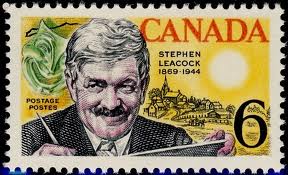
Stephen Leacock, best known in Canada as a humorist, was a learned man, an author of scholarly works, and a professor of political economy at McGill University. His discussion in this short work of the economic relationship between man and society remains as relevant today as when first published almost 100 years ago.

e-Book and other versions of this work are available at Project Gutenberg. A Kindle e-book is available from Amazon at not charge.


By Stephen Leacock B.A., Ph.D., Litt.D., F.R.S.C.
Professor of Political Economy at McGill University, Montreal
Copyright, 1920, John Lane Company


I.—The Troubled Outlook of the Present Hour

THESE are troubled times. As the echoes of the war die away the sound of a new conflict rises on our ears. All the world is filled with industrial unrest. Strike follows upon strike. A world that has known five years of fighting has lost its taste for the honest drudgery of work. Cincinnatus will not back to his plow, or, at the best, stands sullenly between his plow-handles arguing for a higher wage.

The wheels of industry are threatening to stop. The laborer will not work because the pay is too low and the hours are too long. The producer cannot employ him because the wage is too high, and the hours are too short. If the high wage is paid and the short hours are granted, then the price of the thing made,[10] so it seems, rises higher still. Even the high wages will not buy it. The process apparently moves in a circle with no cessation to it. The increased wages seem only to aggravate the increasing prices. Wages and prices, rising together, call perpetually for more money, or at least more tokens and symbols, more paper credit in the form of checks and deposits, with a value that is no longer based on the rock-bottom of redemption into hard coin, but that floats upon the mere atmosphere of expectation.

But the sheer quantity of the inflated currency and false money forces prices higher still. The familiar landmarks of wages, salaries and prices are being obliterated. The "scrap of paper" with which the war began stays with us as its legacy. It lies upon the industrial landscape like snow, covering up, as best it may, the bare poverty of a world desolated by war.

Under such circumstances national finance seems turned into a delirium. Billions are voted where once a few poor millions were[11] thought extravagant. The war debts of the Allied Nations, not yet fully computed, will run from twenty-five to forty billion dollars apiece. But the debts of the governments appear on the other side of the ledger as the assets of the citizens. What is the meaning of it? Is it wealth or is it poverty? The world seems filled with money and short of goods, while even in this very scarcity a new luxury has broken out. The capitalist rides in his ten thousand dollar motor car. The seven-dollar-a-day artisan plays merrily on his gramophone in the broad daylight of his afternoon that is saved, like all else, by being "borrowed" from the morning. He calls the capitalist a "profiteer." The capitalist retorts with calling him a "Bolshevik."

Friday, January 13, 2012

Ron Paul Does Not Exist

By CanSpeccy

According to the NY Times, speaking of the contest for the 2012 Republican Presidential nomination, Mr. Romney is:
... the only veteran of a previous presidential campaign.
"The only veteran of a previous presidential campaign?" asks Dan Amira in New York Magazine:
Wait a second, isn't there some squirrelly little guy running this year who also ran on a very unique and memorable platform in 2008? Jon ... Don ... Don Knotts? No, that can't be right.
The Times subsequently altered its story to acknowledge the existence of Ron Paul.

In the New Hampshire Republican primary, according to this CBS poll, eventual second-place winner Ron Paul simply wasn't in the race, so no point, really, for anyone who's for the US Constitution participating:


Over in Blighty, Craig Murray, former UK Ambassador to Uzbekistan, and seemingly a Pied Piper of the seriously deluded liberal-left, today joined the Ron-Paul-does-not-exist movement with this blog post, which I quote in full:
Americans pissing on murdered Afghans – a description of every Republican candidates’ debate and every Clinton and Obama speech.
The post has prompted vigorous debate among the usual followers, but so far no response has been offered as to why Murray implicitly denies the presence in both the current debates and those in 2008 of Ron Paul, a strict constitutionalist, who has consistently and explicitly condemned America's military engagement in Afghanistan and stated that as Commander in Chief he would immediately bring the troops home.

But Jon Stewart, discussing who would be the first mainstream media pundit to dismiss Ron Paul's New Hampshire second place finish, explodes the Ron-Paul-does-not-exist lie to the greatest effect (But watch this soon before U-Tube takes it down):


Ha! Viacom blocked that one. But this is good too.

And now the vid that Viacom does'nt want you to see has been re-uploaded to U-Tube:


But that's been flushed down Memory Hole like all the rest. U-Tube is well named.

Thursday, January 12, 2012

America's Inevitable Doom

By Bill Bonner

The show goes on!

We are watching the destruction of an empire. All empires must go away sometime. They are natural things. And nature puts a time bomb in everything she creates.

The US empire is doomed. Just like all the others that went before it. It is doomed by nature herself – condemned by the gods to blow up and die.

None of this should be surprising to you, dear reader. We’ve seen this movie before. Hundreds of empires have come and gone. We know how this movie ends. More or less.

What we know for sure is that the US is going broke. There is hardly any other plausible outcome. We’ve gone over the numbers so often we don’t need to repeat them.

Yes, it is true that the feds could still save themselves….if they had the will. They could cut taxes to a flat 10%…and spend only what they raised in tax revenue… That would do the trick from an economic point of view.

But it’s too late for that – politically. Empires have lives of their own. They go forward…expanding…spending…stretching…until, boom, they go too far. Empires do not back up.

Some merely go bankrupt. Others are defeated in war. All end disastrously.

Only one candidate favors rescuing the nation’s finances and pulling the empire back from disaster. Ron Paul. He is considered such an unelectable kook that the newspapers barely mention him. And the papers are right. He is unelectable. Because he is opposed by the zombies.

Wednesday, January 11, 2012

World Without End: Why we can disregard the Mayan doomsday prophecy


One of the legacies of the world financial crisis is that it showed how absolutely clueless pundits, politicians, and financial planners can be about the direction we are heading in. This also explains our growing fascination with the mysterious Maya and their reputation for fathoming the distant future by reading the stars and the courses of the planets.

With the great vacuum of ignorance that enshrouds the future, it is not surprising that this long dead civilization with an astronomical bent has been sucked into the role of providing gnostic hints of what is to come. It was either that or Madame Zaza’s tea leaves.

According to a lot of breathless twats on the Discovery Channel, the Mayans saw something very important lined up for 2012, namely the end of their Grand Cycle, scheduled to end on the 21st of December this year. Depending on who you speak to this will precipitate either the end of the Universe in a cataclysm of fire, a new age with everyone being very nice to each other, or the election of Ron Paul as President of the United States.

But before we get carried away with the impending sense of momentous cosmic change, shouldn’t we pause to ask the all-important question, “Who the heck were the Maya?” just in case they turn out to be a bunch of jungle bums stoked up on fermented coconut juice rather than credible prognosticators of the end of humanity.

Like any semi-barbaric, non-European people, the Maya are nowadays talked about in the hushed reverential tones dictated by political correctness as one of the great civilizations, even though they lacked metal tools and wheels, and enjoyed a spot of human sacrifice.

Rather than evidence of their primitiveness, their lack of tools is often cited as proof of their civilizational superiority, as only a truly higher culture could have built pyramids with so little in the way of technology. In such encomiums little is said about the possibility that the threat of human sacrifice probably served as an extremely important motivator for the toolless masses.

The Uses of Economics Revealed

A Survey of the Labor Market for New Ph.D. Hires in Economics reports that:

Among fresh economics PhD's hired in 2010-2011, 62.4 % found jobs in academic institutions.

LOL

Or as John Kenneth Galbraith remarked:

"Economics is extremely useful as a form of employment for economists."

Humanitarian Bombing


Via YaYa Canada: Fuck Angelina Jolie

See also:
The Beautiful People Who Run the World